
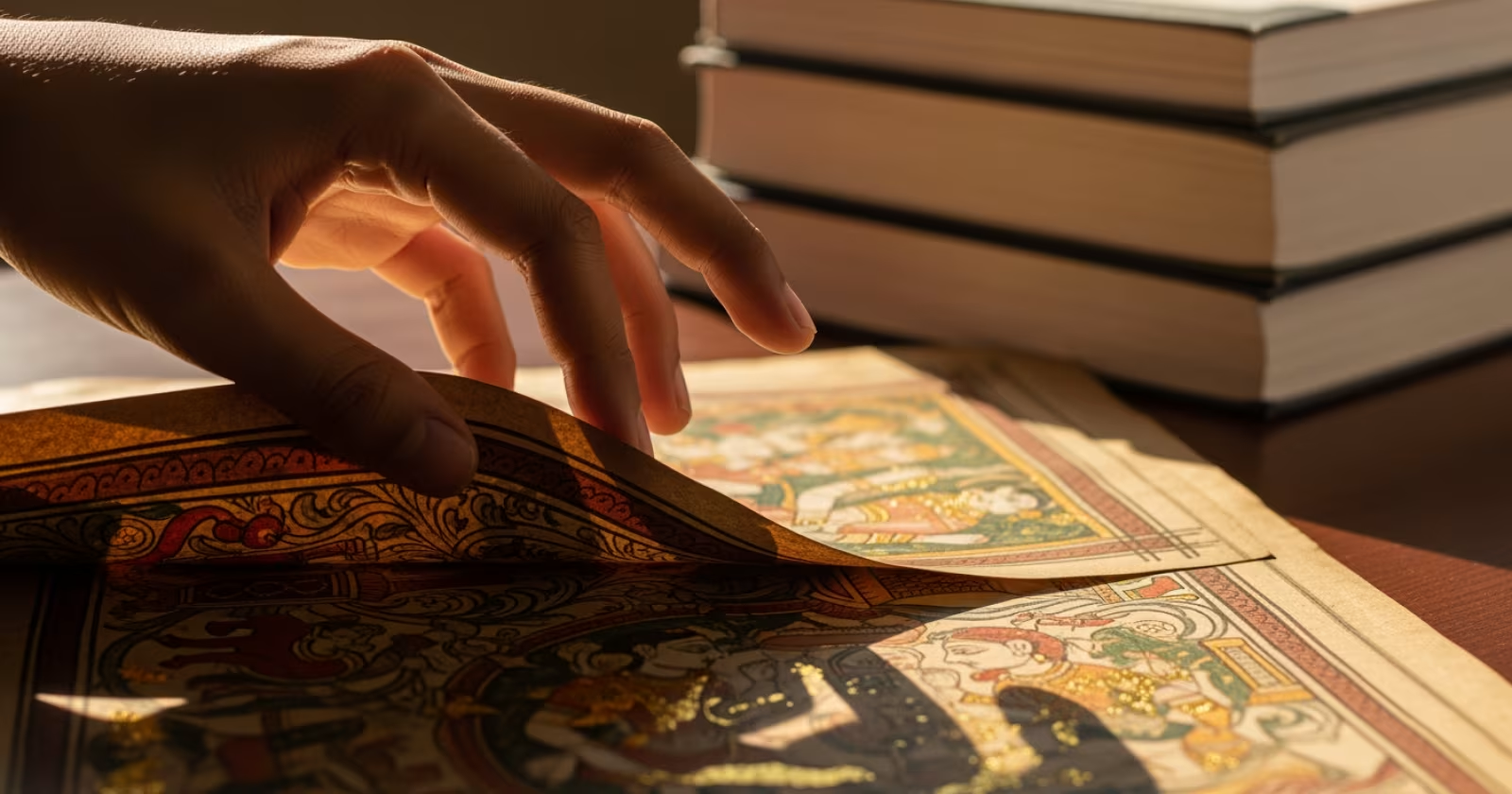
Every year, hundreds of aspirants lose easy marks in Prelims because they skipped a few pages on Indian paintings. I have seen this pattern repeat for over a decade now. The irony is that Indian painting traditions offer some of the most straightforward, factual questions in the exam — the kind where you either know it or you do not. There is no analysis required, no grey area. Yet most aspirants treat Art and Culture as a last-minute afterthought, and within that, paintings get the least attention.
This article walks you through every major Indian painting tradition — from ancient cave murals to modern folk art — with the depth and clarity you need for both Prelims and Mains. By the end, you will have a structured mental map of Indian paintings that stays with you during revision.
Where This Topic Sits in the UPSC Syllabus
Indian painting traditions fall squarely under Art and Culture, which is part of the GS Paper I syllabus for Mains. In Prelims, direct factual questions on paintings appear almost every alternate year. The syllabus line reads: “Indian culture will cover the salient aspects of Art Forms, Literature and Architecture from ancient to modern times.”
| Exam Stage | Paper | Syllabus Section |
|---|---|---|
| Prelims | General Studies | Indian Heritage and Culture — Art Forms |
| Mains | GS-I | Indian Culture — Salient aspects of Art Forms from ancient to modern times |
Between 2015 and 2026, UPSC asked at least 8 to 10 direct or indirect questions related to Indian painting traditions in Prelims alone. In Mains, questions on GI-tagged art forms and UNESCO-listed cultural heritage often require knowledge of painting traditions. Related syllabus topics include Indian architecture, sculpture, and intangible cultural heritage.
The Ancient Roots — Cave Paintings and Murals
Indian painting history begins with prehistoric rock paintings. The Bhimbetka rock shelters in Madhya Pradesh, a UNESCO World Heritage Site, contain paintings dating back over 30,000 years. These paintings depict hunting scenes, animals, and daily life using natural pigments like red ochre and white kaolin.
The next major leap comes with the Ajanta Cave paintings in Maharashtra. Created between the 2nd century BCE and the 6th century CE, these murals are among the finest surviving examples of ancient Indian art. They depict Jataka tales — stories of the Buddha’s previous lives. The technique used was fresco-secco, where paint is applied on dry plaster. Ajanta paintings are known for their use of natural dyes, graceful human figures, and emotional depth.
Ellora and Bagh caves in Madhya Pradesh also contain notable murals, though less well-preserved. For UPSC, remember that Ajanta is primarily a Buddhist site, while Ellora represents Buddhist, Hindu, and Jain traditions together.
The Miniature Painting Schools — The Heart of UPSC Questions
If there is one sub-topic within Indian paintings that UPSC loves, it is miniature paintings. These are small, detailed, and richly coloured works done on perishable materials like paper, cloth, or palm leaves. Let me break down each school clearly.
Pala School is the earliest known miniature painting tradition in India, flourishing in Bengal and Bihar between the 8th and 12th centuries under the Pala dynasty. These paintings were primarily illustrations in Buddhist manuscripts on palm leaves. Themes were Buddhist, and the style influenced painting traditions in Nepal and Tibet.
Mughal Miniature Paintings developed under Akbar, Jahangir, and Shah Jahan. Akbar established a formal atelier (workshop) called the tasvir khana. Persian masters like Mir Sayyid Ali and Abdus Samad trained Indian artists. The result was a fusion of Persian refinement and Indian naturalism. Jahangir’s reign is considered the golden age of Mughal painting — he was personally passionate about naturalistic animal and bird portraits. Painters like Abul Hasan, Mansur (given the title Nadir-ul-Asr), and Bishan Das are names you should remember.
Rajput Paintings emerged as a distinct tradition in the royal courts of Rajasthan. Unlike Mughal paintings which focused on court life and portraits, Rajput paintings depicted themes from Hindu epics — Ramayana, Mahabharata, and especially the life of Krishna. Key sub-schools include Mewar, Bundi, Kishangarh, Jaipur, and Marwar. The most famous Rajput painting is the Bani Thani from Kishangarh, often called India’s Mona Lisa.
Pahari Paintings developed in the hill states of Himachal Pradesh and Jammu. They are divided into two broad groups — Basohli (bold, intense colours, early phase) and Kangra (soft, lyrical, later phase). Kangra paintings are known for their depiction of Radha-Krishna love themes, lush green landscapes, and delicate female figures. The patron most associated with Kangra school is Raja Sansar Chand.
Deccan Paintings from the sultanates of Bijapur, Golconda, and Ahmednagar had a distinct style influenced by Persian, Turkish, and local traditions. They are less frequently asked about but have appeared in Prelims.
Folk and Tribal Painting Traditions — The Growing UPSC Favourite
In recent years, UPSC has shifted attention towards folk and tribal art forms. These are living traditions, often practised by specific communities, and they connect to topics like GI tags, tribal welfare, and intangible heritage.
Madhubani (Mithila) paintings from Bihar are done using fingers, twigs, and natural dyes on walls and canvas. They depict gods, nature, and social events. This art form received a Geographical Indication (GI) tag. Warli paintings from Maharashtra use geometric shapes — circles, triangles, and squares — to depict daily tribal life. The human figure in Warli art is always made of two triangles joined at the tip.
Pattachitra from Odisha and West Bengal features mythological narratives painted on cloth. Kalamkari from Andhra Pradesh involves hand-painting or block-printing on cotton fabric using vegetable dyes. There are two styles — Srikalahasti (pen-drawn, temple themes) and Machilipatnam (block-printed, Persian influence). Gond paintings from Madhya Pradesh, Phad paintings from Rajasthan, and Thangka paintings from Sikkim and Ladakh are other traditions that have appeared in UPSC questions.
Why Aspirants Underestimate This Area
In my experience, there are three reasons. First, most standard textbooks cover paintings in a few dry pages with no visual context, making it hard to remember. Second, aspirants perceive Art and Culture as low-weightage, which is factually wrong — it consistently carries 8 to 15 questions in Prelims. Third, there is no analytical framework required here. It is pure knowledge. You either prepared it or you did not.
The solution is simple. Make a comparison chart of all painting schools with columns for period, region, patron, themes, and special features. Spend two focused sessions on this topic. Use image-based resources to visually associate each style with its characteristics. Visual memory is far more reliable than rote learning for art-related topics.
Previous Year UPSC Questions on This Topic
Q1. With reference to Mian Tansen, which one of the following statements is not correct?
(UPSC Prelims 2019 — General Studies)
Answer: While this question is about music, UPSC frequently clubs art and culture questions together. The pattern shows that factual recall about specific artists, patrons, and art forms is tested directly. For paintings, expect similar pattern — matching a painter with a school or a patron with a tradition.
Q2. Consider the following pairs: Tradition — State. 1. Chapchar Kut festival — Mizoram 2. Khongjom Parba ballad — Manipur 3. Thang-Ta dance — Sikkim. Which of the pairs given above is/are correct?
(UPSC Prelims 2018 — General Studies)
Answer: Pairs 1 and 2 are correct. This question tests your ability to match cultural traditions with their states — exactly the kind of mapping required for painting traditions. UPSC could easily ask you to match Bani Thani with Kishangarh, or Pattachitra with Odisha.
Q3. Discuss the contribution of Mughal emperors to the development of painting as an art form in India. How did the Mughal style differ from the Rajput style?
(UPSC Mains 2020 pattern — GS-I)
Model Answer Approach: Begin with Akbar’s tasvir khana and the Persian influence. Mention key artists — Mansur, Abul Hasan, Daswanth. Then contrast with Rajput painting — religious themes versus courtly themes, bold colours versus refined tones, community-based versus court-based patronage. Conclude by noting how both traditions influenced each other over time. This answer requires structured comparison, which is why a pre-made table in your notes helps enormously during revision.
Key Points to Remember for UPSC
- Bhimbetka rock paintings are the oldest in India, using natural pigments like red ochre — a UNESCO World Heritage Site in Madhya Pradesh.
- Ajanta murals used fresco-secco technique and depicted Jataka tales; they span from the 2nd century BCE to the 6th century CE.
- Pala School is the earliest miniature tradition — Buddhist palm-leaf manuscripts from Bengal and Bihar (8th-12th century).
- Jahangir’s reign was the golden period of Mughal painting; Mansur (Nadir-ul-Asr) specialised in flora and fauna.
- Bani Thani of Kishangarh is the most iconic Rajput painting — always associate it with Rajasthan.
- Pahari paintings split into Basohli (bold, early) and Kangra (lyrical, later) — both from the hill states.
- Folk art GI tags are increasingly tested — know Madhubani, Warli, Pattachitra, Kalamkari, and Gond with their states.
- Kalamkari has two styles: Srikalahasti (pen-drawn, temple narratives) and Machilipatnam (block-printed, Persian motifs).
Indian painting traditions are one of the most scoring areas in Art and Culture if you prepare them systematically. I recommend spending two dedicated sessions building a comparison table of all major schools — cover the period, region, patron, themes, technique, and one signature feature for each. Once that table is in your notes, revision becomes a five-minute exercise before the exam. This is not a topic that demands deep analysis — it rewards organised preparation.