
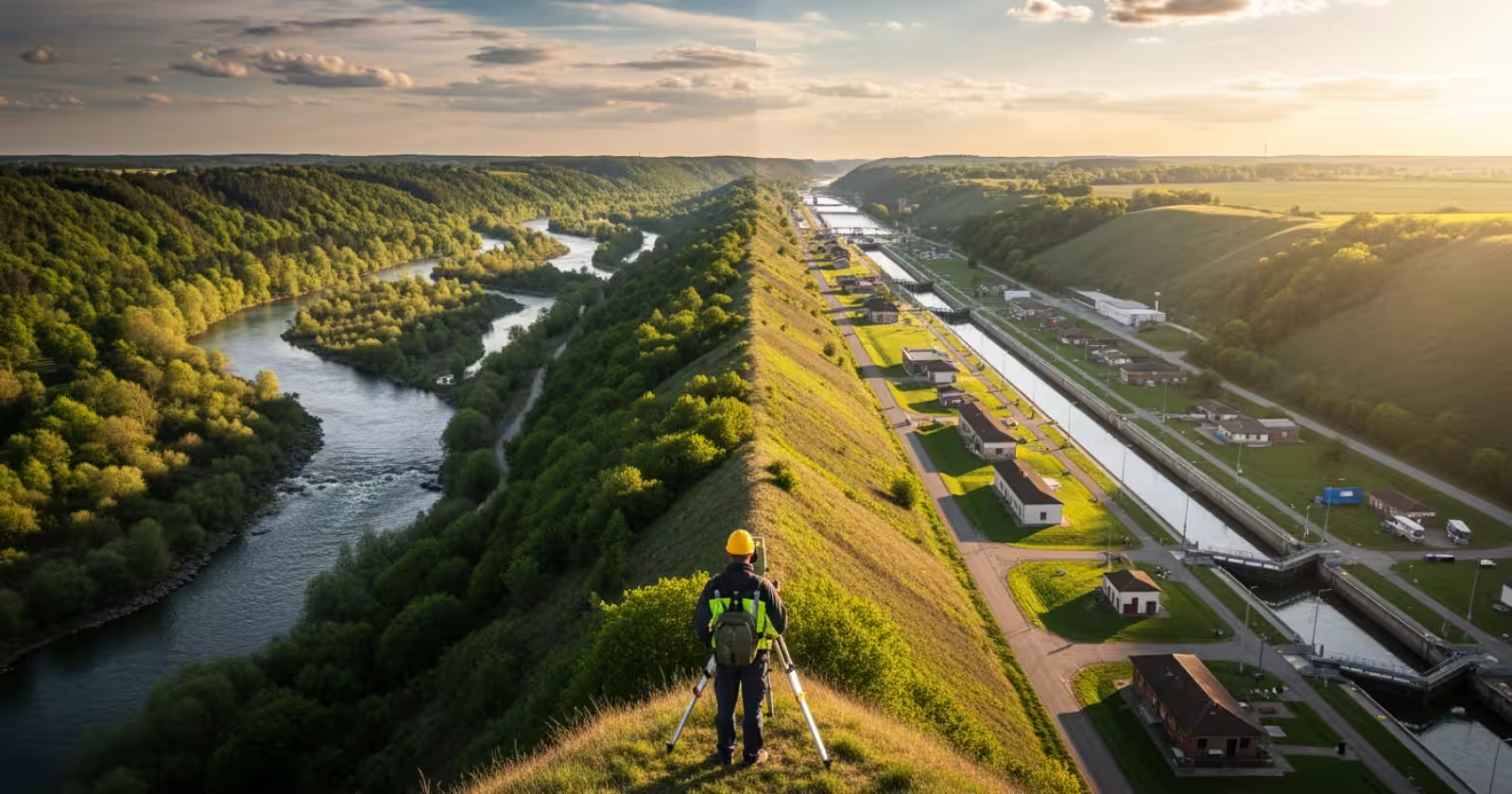
Few infrastructure ideas in India spark as much debate as the plan to connect rivers across the country. For UPSC aspirants, this single topic sits at the intersection of physical geography, Indian polity, environment, and governance — making it one of the most versatile subjects you can prepare.
I have seen this topic appear in various forms across Prelims and Mains for over a decade. Whether it is a factual question about the Ken-Betwa link or an essay on cooperative federalism and water disputes, river interlinking keeps returning. Let me walk you through everything you need to know — from the basic concept to exam-ready analysis.
Where This Topic Sits in the UPSC Syllabus
River interlinking is a cross-cutting topic. It does not sit neatly in one paper. Here is how it maps across the UPSC syllabus:
| Exam Stage | Paper | Syllabus Section |
|---|---|---|
| Prelims | General Studies | Indian Geography — Drainage Systems; Current Events of National Importance |
| Mains | GS-I | Distribution of Key Natural Resources — Water; Geography of India |
| Mains | GS-II | Issues relating to Federal Structure; Interstate Relations; Government Policies |
| Mains | GS-III | Infrastructure — Water Resources; Conservation; Environmental Pollution |
Related topics include interstate water disputes (like Cauvery and Krishna), the National Water Policy, drought management, and environmental impact assessments. Questions have appeared roughly 8-10 times in various forms since 2010.
The Basic Idea Behind River Interlinking
India receives plenty of rainfall — but it is unevenly distributed. The Brahmaputra basin gets excess water, while Rajasthan and parts of Tamil Nadu face chronic shortages. The core idea of river interlinking is simple: transfer water from surplus basins to deficit basins through a network of canals, reservoirs, and dams.
This concept is called inter-basin water transfer. Think of it like a national grid for water, similar to how a power grid moves electricity from where it is generated to where it is needed.
The idea is not new. Captain Arthur Cotton proposed linking Indian rivers during British rule. In the 1970s, Dr. K.L. Rao, a Union Minister, proposed the Ganga-Cauvery link. Later, Captain Dinshaw Dastur proposed a “Garland Canal” scheme. The modern version took shape when the National Water Development Agency (NWDA) was established in 1982 under the Ministry of Jal Shakti.
Structure of the National River Linking Project
The National River Linking Project (NRLP) has two main components. The Himalayan Component involves 14 links connecting rivers like the Ganga, Brahmaputra, and their tributaries. The Peninsular Component involves 16 links connecting rivers such as Godavari, Krishna, Cauvery, and Mahanadi.
Together, these 30 links aim to create approximately 15,000 km of new canals and build 3,000 storage structures. The estimated cost has risen from about ₹5.6 lakh crore to well over ₹10 lakh crore at current prices.
The first project to receive concrete approval is the Ken-Betwa Link Project in Madhya Pradesh and Uttar Pradesh. The Union Cabinet approved it in 2021, and work is underway as of 2026. It aims to transfer surplus water from the Ken river to the water-deficit Betwa basin, benefiting the drought-prone Bundelkhand region.
The Geography Dimension — What UPSC Tests
From a geography perspective, UPSC expects you to understand several layers. First, know the drainage systems — which rivers are perennial, which are seasonal, and why. The Himalayan rivers are snow-fed and carry more water, while peninsular rivers depend heavily on monsoon rainfall.
Second, understand water surplus and deficit. The Brahmaputra basin alone carries nearly 30% of India’s river water but serves a relatively small population. Meanwhile, the Cauvery and Pennar basins serve dense populations with limited water.
Third, know the environmental concerns. The Ken-Betwa project, for instance, will submerge a significant portion of the Panna Tiger Reserve. River ecosystems depend on natural flow patterns. Diverting water changes sediment loads, affects downstream fisheries, and alters floodplain ecology. UPSC has asked about environmental impact assessments in this context.
The Policy and Governance Dimension
This is where the topic becomes rich for GS-II and GS-III. Water is a State subject under Entry 17 of the State List. Interstate rivers fall under Union jurisdiction through Entry 56 of the Union List. This creates a natural tension — a federalism question that UPSC loves.
Surplus states rarely want to share water. Tamil Nadu and Karnataka have fought over the Cauvery for decades. Now imagine asking Assam or Bihar to share Brahmaputra water with Rajasthan. The political challenge is enormous.
The Supreme Court of India has also weighed in. In 2012, it directed the government to implement river interlinking in a time-bound manner. But implementation requires consent from state governments, environmental clearances, rehabilitation of displaced people, and massive funding. Each of these is a governance challenge in itself.
The National Water Policy 2012 supports integrated water resource management but does not explicitly mandate river interlinking. The National Commission for Integrated Water Resources Development has recommended a cautious, project-by-project approach rather than a grand nationwide plan.
Arguments For and Against — Exam-Ready Analysis
For your Mains answers, you need a balanced view. Supporters argue that interlinking can provide irrigation to 35 million hectares, generate 34,000 MW of hydropower, reduce floods in surplus basins, and provide drinking water security. The economic benefits for drought-prone regions like Bundelkhand, Marathwada, and Rayalaseema could be transformative.
Critics raise valid concerns. The ecological cost of diverting rivers is unpredictable. Displacement of lakhs of families creates social conflict. The financial burden is massive. Some experts argue that rainwater harvesting, watershed management, and demand-side management are cheaper and less risky alternatives. There is also the issue of climate change — river flow patterns are shifting, and a project designed for today’s hydrology may not work in 2050.
Previous Year UPSC Questions on This Topic
Q1. Discuss the advantages and challenges of the interlinking of rivers in India.
(UPSC Mains 2020 — GS-I)
Answer: India’s river interlinking aims to transfer water from surplus basins to deficit ones. Advantages include drought mitigation, enhanced irrigation potential covering 35 million hectares, hydropower generation, and flood control in eastern rivers. However, challenges are significant. Environmental damage to river ecosystems, submergence of forests and wildlife habitats, massive displacement of communities, interstate political disputes over water sharing, and the enormous financial cost exceeding ₹10 lakh crore all pose hurdles. The federal structure complicates implementation since water is a State subject. A balanced approach involving environmental safeguards, stakeholder consultation, and phased implementation is necessary.
Explanation: This question tests your ability to present both sides. The examiner wants specific data — hectares of irrigation, cost figures, names of specific projects like Ken-Betwa. Avoid generic statements. Link your answer to federalism and environmental governance for extra depth.
Q2. Which of the following is the first river interlinking project approved by the Government of India?
(a) Godavari-Krishna Link
(b) Ken-Betwa Link
(c) Parbati-Kalisindh-Chambal Link
(d) Mahanadi-Godavari Link
(UPSC Prelims Style — General Studies)
Answer: (b) Ken-Betwa Link. The Union Cabinet approved this project in December 2021. It connects the Ken river in Madhya Pradesh with the Betwa river, primarily benefiting the Bundelkhand region across MP and UP.
Explanation: UPSC frequently tests factual knowledge about flagship government projects. Remember the state and river details. Also note that Panna Tiger Reserve is affected — this can appear in an environment question.
Q3. “Inter-state water disputes highlight the structural weakness of Indian federalism.” Critically examine this statement with reference to river interlinking proposals.
(UPSC Mains Style — GS-II)
Answer: India’s federal design places water in the State List while granting the Union power over interstate rivers. This dual jurisdiction creates friction. The Inter-State River Water Disputes Act, 1956 provides for tribunals, but their awards face implementation delays — the Cauvery dispute lasted over 30 years. River interlinking intensifies this tension because surplus states resist water transfer. However, calling this a “structural weakness” is only partially correct. The Constitution provides mechanisms — Article 262, parliamentary legislation, and tribunal arbitration. The weakness lies more in political will than in structural design. Cooperative federalism through institutions like the Inter-State Council and river basin organisations can address these disputes more effectively than centralized mandates.
Explanation: This question combines polity and geography. The examiner wants constitutional provisions (Article 262, Entry 56), specific dispute examples, and a nuanced judgment. Do not fully agree or disagree — “critically examine” demands balance.
Key Points to Remember for UPSC
- NWDA was set up in 1982 and identifies 30 river links under two components — Himalayan (14) and Peninsular (16).
- The Ken-Betwa Link is the first approved project, impacting Bundelkhand and partially submerging Panna Tiger Reserve.
- Water is a State subject (Entry 17, State List), but interstate rivers come under Union jurisdiction (Entry 56, Union List).
- Article 262 empowers Parliament to legislate on interstate water disputes and bar court jurisdiction.
- The project promises 35 million hectares of irrigation and 34,000 MW hydropower but costs exceed ₹10 lakh crore.
- Environmental concerns include habitat destruction, altered sediment flows, and unpredictable downstream ecological impacts.
- Alternatives like watershed management, rainwater harvesting, and micro-irrigation are frequently cited by critics and are valid points for Mains answers.
- Climate change adds uncertainty — river flow projections used for planning may not hold in coming decades.
River interlinking sits at that rare intersection where geography, polity, environment, and economics all meet. Preparing it well gives you material for at least three GS papers and potentially an essay. I suggest making a single consolidated note covering the geographic basis, constitutional provisions, environmental concerns, and key projects. Use that one note to answer questions across papers — that is how efficient preparation works.