
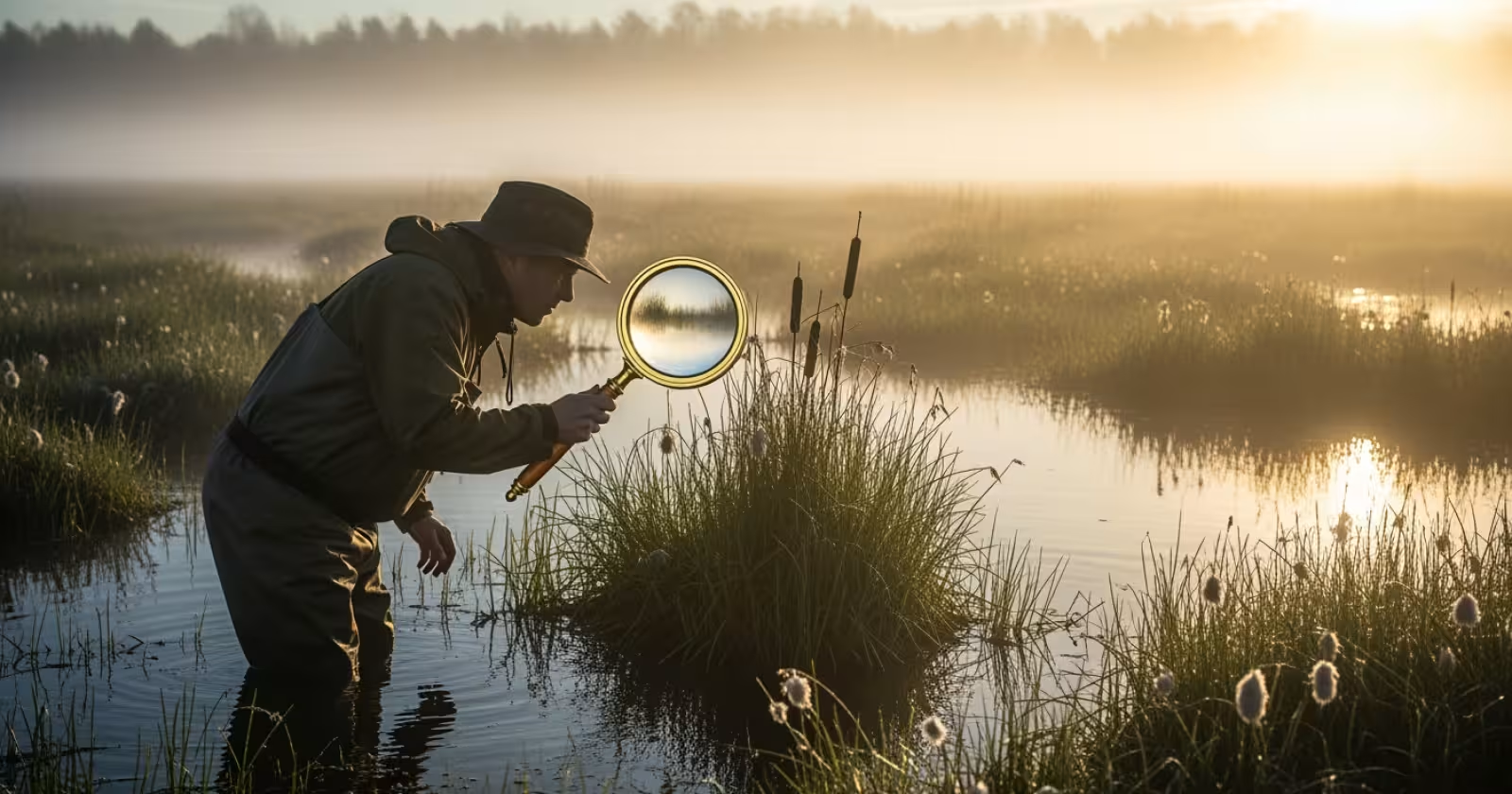
Every year, UPSC finds a clever new way to test the same old wetlands topic — and every year, thousands of aspirants fall for the trap. After analysing over a decade of Previous Year Questions, I can tell you that Ramsar Sites and wetlands are among the most reliably recurring themes in both Prelims and Mains, yet the packaging changes so often that students treat each question as brand new.
This article breaks down the core concepts, the patterns UPSC uses to disguise these questions, and the specific knowledge you need to lock in these marks with confidence. Whether you are a beginner or someone revising for your second attempt, this will serve as a one-stop resource.
Where This Topic Sits in the UPSC Syllabus
Wetlands and Ramsar Sites sit at the intersection of Environment, Geography, and even Governance. UPSC can pull a question from multiple angles, which is exactly why the topic reappears so frequently.
| Exam Stage | Paper | Syllabus Section |
|---|---|---|
| Prelims | General Studies | Biodiversity, Environment, Ecology |
| Mains | GS-III | Conservation, Environmental Pollution and Degradation |
| Mains | GS-I | Physical Geography — Distribution of key natural resources |
The topic has appeared in Prelims at least 8-10 times since 2010 in direct or indirect forms. In Mains, it links beautifully with questions on biodiversity conservation, international environmental agreements, and ecosystem services. Related topics include the Wildlife Protection Act, Biodiversity Hotspots, COP meetings, and the Montreux Record.
What Exactly Is the Ramsar Convention?
The Ramsar Convention was signed in 1971 in the city of Ramsar, Iran. It is the oldest modern intergovernmental environmental treaty. Its full name is the “Convention on Wetlands of International Importance especially as Waterfowl Habitat.” India became a signatory in 1982.
The convention does not just protect wetlands for birds. It promotes the wise use of all wetlands — a concept that means sustainable utilisation that maintains the ecological character of the wetland. This “wise use” concept is a favourite UPSC testing point.
Each member country must designate at least one wetland for the List of Wetlands of International Importance. As of 2026, India has over 80 Ramsar Sites, making it one of the countries with the highest number of designated sites in South Asia.
Why Wetlands Matter — The Ecosystem Services Angle
UPSC loves to test whether you understand why wetlands are valuable, not just where they are located. Wetlands provide four categories of ecosystem services:
- Provisioning services: Freshwater supply, fish, fodder, and medicinal plants.
- Regulating services: Flood control, groundwater recharge, water purification, and climate regulation through carbon sequestration.
- Cultural services: Tourism, recreation, spiritual significance (think of Dal Lake or Loktak Lake).
- Supporting services: Nutrient cycling, soil formation, habitat for biodiversity.
A single wetland like Chilika Lake in Odisha supports fishing livelihoods for lakhs of people, hosts migratory birds from Central Asia, and acts as a buffer against cyclonic storm surges along the coast. When UPSC asks about wetlands and livelihoods, this is the kind of integrated understanding they expect.
The Montreux Record — A Hidden Favourite
The Montreux Record is a register of Ramsar Sites where ecological character has changed, is changing, or is likely to change due to human interference or natural processes. Think of it as a “red flag” list within the Ramsar framework.
India once had two sites on the Montreux Record — Keoladeo National Park (Rajasthan) and Loktak Lake (Manipur). Chilika Lake was removed from the record in 2002 after successful restoration. Keoladeo was removed in 2021. Loktak Lake, however, remains on the list due to ecological concerns. UPSC has tested this specific detail multiple times in statement-based Prelims questions.
How UPSC Disguises Wetland Questions
This is where most aspirants lose marks. UPSC rarely asks a straightforward question like “How many Ramsar Sites does India have?” Instead, the examiner wraps the question in layers. Here are the common disguises I have observed:
Disguise 1 — The Match-the-Pair: You are given a list of wetlands and asked to match them with their states. The trick is including one wrong pairing that sounds plausible. For example, pairing Deepor Beel with Meghalaya instead of Assam.
Disguise 2 — The Multi-Statement: Three or four statements about the Ramsar Convention are given. One will subtly say it is legally binding (it is not — it is a voluntary framework). Another might say only government-owned land can be designated (also false — private land can qualify).
Disguise 3 — The Current Affairs Wrapper: A newly designated Ramsar Site is mentioned in the news. UPSC uses it as a trigger to test your knowledge about the convention itself, the state where the site is located, or the ecological feature of that specific wetland.
Disguise 4 — The Governance Link: Questions about India’s Wetlands (Conservation and Management) Rules, 2017 are framed under environmental governance. These rules replaced the older 2010 rules and shifted much of the implementation responsibility to State Wetland Authorities. UPSC has tested the role of the National Wetland Committee and district-level bodies.
Key Indian Ramsar Sites Every Aspirant Must Know
You do not need to memorise all 80+ sites, but you must know the landmark ones and their distinguishing features. Focus on these clusters:
- Chilika Lake (Odisha): Largest brackish water lagoon in Asia. Famous for Irrawaddy dolphins.
- Wular Lake (J&K): One of the largest freshwater lakes in Asia.
- Loktak Lake (Manipur): Known for phumdis (floating biomass). Keibul Lamjao National Park floats on it — the only floating national park in the world.
- Sambhar Lake (Rajasthan): India’s largest inland saltwater lake.
- Deepor Beel (Assam): A permanent freshwater lake in the Brahmaputra valley.
- Vembanad-Kol (Kerala): Longest lake in India. Connected to the famous Kuttanad farming region below sea level.
In 2024 and 2026, India added several new Ramsar Sites in states like Tamil Nadu, Madhya Pradesh, and Odisha. Keep your list updated through monthly current affairs sources.
Previous Year UPSC Questions on This Topic
Q1. Consider the following statements about the Ramsar Convention: (1) It was signed in 1__(year). (2) India is a signatory. (3) The convention is legally binding on member states. Which of the above is/are correct?
(UPSC Prelims 2018 pattern — GS)
Answer: Statements 1 and 2 are correct. The Ramsar Convention is NOT legally binding. It functions on the principle of voluntary commitment by member countries. This distinction between legally binding treaties and voluntary frameworks is a classic UPSC trap.
Q2. Which of the following wetlands is/are on the Montreux Record? (1) Keoladeo National Park (2) Loktak Lake (3) Chilika Lake
(UPSC Prelims pattern — Environment)
Answer: As of 2026, only Loktak Lake remains on the Montreux Record from India. Chilika was removed in 2002, and Keoladeo was removed in 2021. UPSC relies on aspirants using outdated information here.
Q3. Discuss the significance of wetlands as ecosystem service providers and evaluate India’s efforts in wetland conservation under domestic and international frameworks. (250 words)
(UPSC Mains — GS-III)
Answer approach: Start by defining wetlands and their four ecosystem services. Then discuss the Ramsar Convention and India’s Wetlands Rules 2017. Mention the National Plan for Conservation of Aquatic Ecosystems (NPCA). Critically evaluate gaps — encroachment, pollution, weak enforcement at state level. Conclude with the need for community-based conservation models like the Chilika Development Authority.
Key Points to Remember for UPSC
- The Ramsar Convention (1971) is voluntary, not legally binding — a top UPSC trap.
- India joined in 1982 and has over 80 designated Ramsar Sites as of 2026.
- The Montreux Record flags threatened Ramsar Sites. Only Loktak Lake from India remains on it currently.
- Wetlands Rules 2017 decentralised conservation responsibility to State Wetland Authorities.
- Chilika Lake’s successful removal from the Montreux Record is a model conservation case study.
- Wetlands provide flood control, groundwater recharge, carbon sequestration, and livelihood support — know all four service types.
- Loktak Lake’s phumdis and Keibul Lamjao (floating national park) are unique identifiers UPSC loves to test.
Mastering wetlands for UPSC is not about memorising a long list of sites. It is about understanding the framework, knowing the traps, and recognising the topic even when it appears in an unfamiliar costume. As a next step, take any five recent Ramsar Site additions and write down their state, ecological type, and one unique feature each — that single exercise will prepare you better than reading ten articles passively. Steady, focused preparation always compounds over time.
Get fastest alerts on Results, Admit Cards & Govt Jobs directly on your phone.