Every year, UPSC dedicates between 8 and 14 questions in Prelims General Studies Paper I to Art and Culture. Yet most aspirants treat this section as a last-minute gamble. After spending years analysing previous year question papers from 2011 to 2026, I can tell you that UPSC follows identifiable patterns — and if you study those patterns smartly, you can predict high-probability zones with surprising accuracy.
Why PYQ Pattern Analysis Works for Art and Culture
UPSC does not repeat exact questions. However, it repeatedly tests the same conceptual zones. For example, questions on Buddhist sites appeared in 2013, 2016, 2019, and 2023. The angles change, but the territory stays the same. This is what I call a “hot zone” — a cluster of related sub-topics that UPSC returns to every few years.
Art and Culture is vast, but the examinable portion is not. When I mapped every PYQ from the last 15 years, roughly 70 percent of all questions came from just six sub-topics. Let me walk you through each one with specific focus areas for your preparation in 2026.
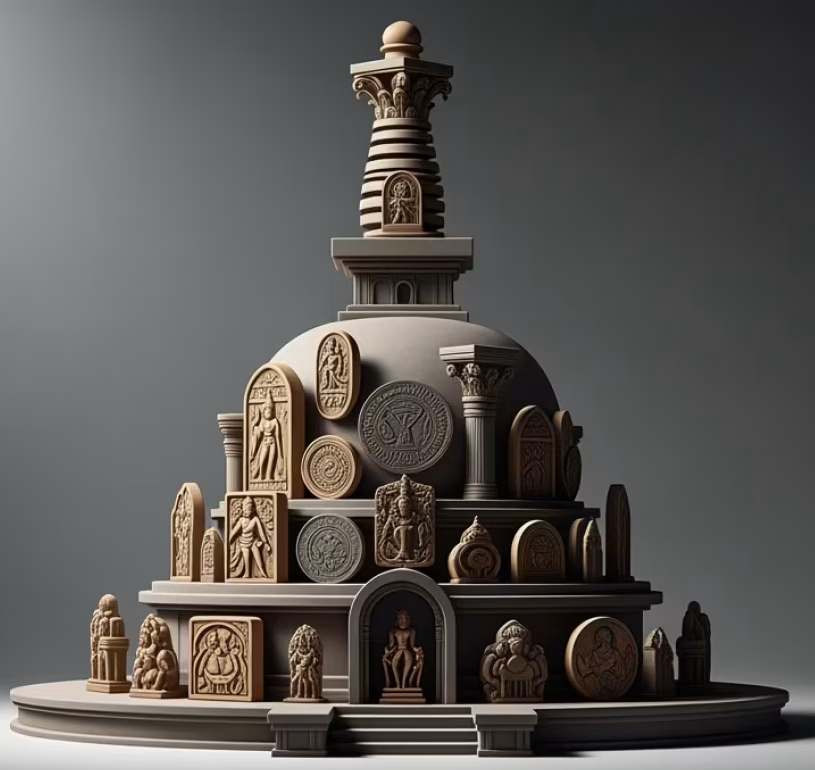
Hot Zone 1 — Indian Architecture (Temples, Stupas, and Caves)
This is the single most tested area. UPSC loves asking about Nagara, Dravida, and Vesara styles of temple architecture. You must know the structural differences — shikhara vs. vimana vs. gopuram. Questions often come as match-the-following or statement-based formats.
Rock-cut caves like Ajanta, Ellora, Elephanta, and Badami have appeared multiple times. Focus on the patron dynasty, the religion associated, and the unique artistic feature of each site. For 2026, pay special attention to lesser-known sites like Udayagiri caves in Odisha and Aihole temples in Karnataka — UPSC has been moving toward these in recent cycles.
Hot Zone 2 — Classical and Folk Dance Forms
UPSC has tested classical dance forms repeatedly. But the trend since 2020 has shifted toward folk and tribal performing arts. You should prepare a comparison table for all eight classical dance forms, but also study GI-tagged folk traditions like Chhau, Yakshagana, Theyyam, and Lavani.
The examiner typically tests the state of origin, the associated text or treatise, and the guru or founder figure. For Bharatanatyam, know the Natyashastra connection. For Sattriya, know its Vaishnavite roots in Assam.
Hot Zone 3 — Indian Paintings
Miniature painting schools are a perennial favourite. I have seen Kangra, Pahari, Mughal, Rajasthani, and Deccan schools tested across multiple years. UPSC asks about patronage, themes depicted, and distinguishing features. For 2026, Pattachitra paintings of Odisha and Warli art of Maharashtra are strong candidates — UPSC has been asking about tribal and folk art more frequently since 2021.
Hot Zone 4 — Buddhist, Jain, and Hindu Iconography
Questions about Gandhara vs. Mathura school of sculpture appear almost on a cycle. Know the Greek influence on Gandhara art and the indigenous style of Mathura. UPSC also tests Jain architectural sites like Dilwara temples, Ranakpur, and Shravanabelagola.
For Buddhist art, understand the evolution from aniconic representation (symbols like the Bodhi tree and footprints) to iconic representation (actual Buddha images). This conceptual shift is a favourite testing point.
Hot Zone 5 — Music and Literary Traditions
Carnatic vs. Hindustani music distinctions have appeared in Prelims. Know the key ragas, the gharana system, and important composers like Tyagaraja, Muthuswami Dikshitar, and Tansen. UPSC also tests Sangam literature, Bhakti and Sufi literary traditions, and medieval literary works.
A recurring pattern involves matching literary works to their authors or languages. Keep a ready reference of texts like Arthashastra, Indica, Rajatarangini, Amuktamalyada, and their creators.
Hot Zone 6 — UNESCO and Intangible Heritage
Every year since 2018, at least one question has come from India’s UNESCO World Heritage Sites or Intangible Cultural Heritage list. For 2026, know the most recent additions. Santiniketan was added in 2023. Also revise the complete list of India’s 42 World Heritage Sites — UPSC may test lesser-known ones like the Kakatiya Rudreshwara Temple or Dholavira.
PYQ Frequency Map — Where Questions Come From
| Sub-Topic | Questions (2011–2026) | Trend Direction |
|---|---|---|
| Temple Architecture | 18–22 | Stable — appears every year |
| Classical and Folk Dance | 10–14 | Rising — folk forms increasing |
| Paintings (Miniature and Folk) | 8–12 | Rising — tribal art gaining focus |
| Buddhist and Jain Art | 12–16 | Stable — cyclic pattern |
| Music and Literature | 6–9 | Moderate — appears every 2 years |
| UNESCO Heritage | 5–8 | Rising — new additions tested fast |
| Festivals and Tribal Culture | 4–7 | Rising — GI tags linked |
How UPSC Frames Art and Culture Questions
Understanding the question format is half the battle. Based on my analysis, UPSC uses three dominant formats for this section. First, statement-based questions where you must identify which statements are correct. Second, match-the-following — pairing sites, art forms, or texts with their attributes. Third, “consider the following” lists where you must identify which items belong to a given category.
The trick is that UPSC often includes one plausible-sounding wrong option. You cannot rely on vague familiarity. You need precise factual knowledge — the patron king, the exact location, or the specific religious association.
My Recommended Preparation Strategy
Start with NCERT Class 11 “An Introduction to Indian Art” and Class 11 “Living Craft Traditions of India” chapters from Fine Arts textbook. These two sources alone cover roughly 40 percent of the examinable content. Then move to CCRT (Centre for Cultural Resources and Training) notes available freely online.
Build a personal revision sheet organised by dynasty and region rather than by art form. This way, when you study the Chola dynasty, you simultaneously cover Brihadeeswarar temple, bronze Nataraja sculptures, and Carnatic music patronage. This interconnected approach mirrors how UPSC frames its questions.
For current additions, track the Ministry of Culture’s press releases and the latest UNESCO announcements. UPSC has shown a pattern of testing newly inscribed sites within one to two years of their addition.
Key Points to Remember for UPSC
- Temple architecture (Nagara, Dravida, Vesara) is the most consistently tested Art and Culture sub-topic in Prelims.
- Folk and tribal art forms are replacing purely classical questions — prepare Chhau, Warli, Pattachitra, and Theyyam.
- Gandhara vs. Mathura school distinctions appear on a 3-to-4-year cycle and are due for a return.
- UNESCO World Heritage additions from the last three years are high-probability questions.
- UPSC tests precise details — patron dynasty, exact location, religious affiliation — not general awareness.
- NCERT Fine Arts textbook and CCRT notes together cover the bulk of the static syllabus.
- Organise your revision by dynasty and region, not by isolated art forms, to build interconnected understanding.
Art and Culture rewards focused preparation more than any other Prelims subject. The territory is finite, the patterns are visible, and the returns on smart study are immediate. Pick up the NCERT Fine Arts textbook this week, build your dynasty-wise revision chart, and start mapping what you learn to the PYQ hot zones outlined above. Consistent, pattern-aware preparation in this section can reliably add 8 to 12 marks to your Prelims score — and that margin often makes the difference.