After analyzing over 15 years of UPSC question papers, I noticed something that most aspirants and even many teachers overlook. Temple architecture questions in UPSC do not test random facts. They follow a remarkably consistent pattern, and once you see it, your entire approach to this topic changes forever.
In this piece, I am going to break down exactly how UPSC frames questions on temple architecture, what the examiners are really testing, and how you can use this hidden pattern to predict the kind of questions that are likely to appear in 2026 and beyond.
Where This Topic Sits in the UPSC Syllabus
Temple architecture falls squarely under GS Paper I for Mains, within the segment on Indian Culture. For Prelims, it appears under the Art and Culture portion of General Studies. This topic has appeared in some form almost every single year since 2011.
| Exam Stage | Paper | Syllabus Section |
|---|---|---|
| Prelims | General Studies | Indian Culture — Salient aspects of Art Forms, Architecture |
| Mains | GS-I | Indian Culture — Art Forms, Literature, and Architecture from ancient to modern times |
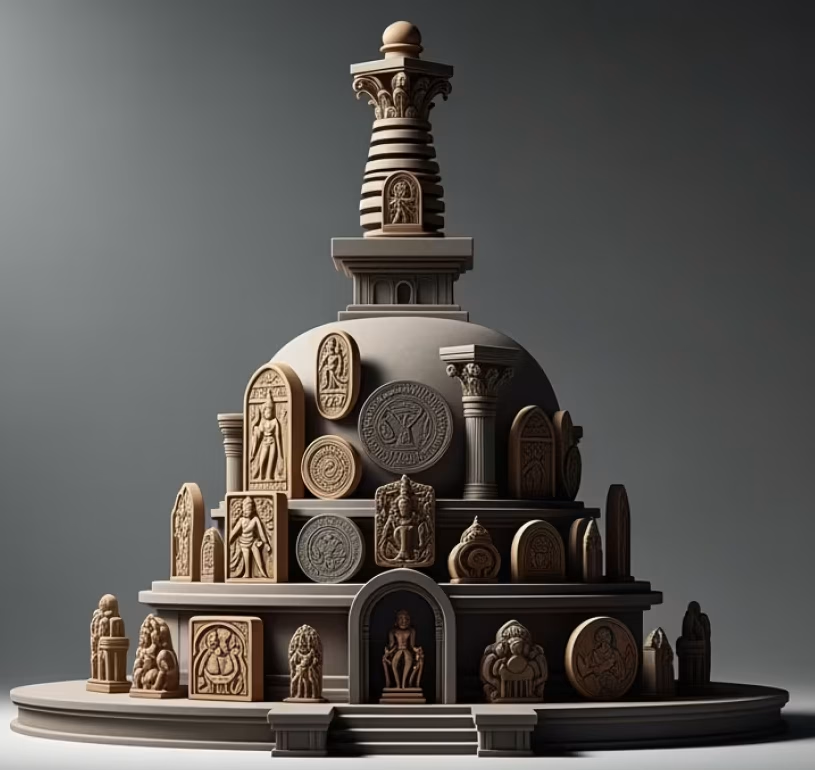
Related topics in the same syllabus zone include rock-cut architecture, Buddhist stupas, Indo-Islamic architecture, and sculpture traditions. UPSC often links temple architecture with dynasty-specific governance or religious reform movements.
The Pattern Most Aspirants Miss Completely
Here is what I have found after years of tracking these questions. UPSC almost never asks you to simply name a temple and its location. That is the trap most students prepare for. They memorize lists — Kandariya Mahadeva, Brihadeeswarar, Shore Temple — and expect direct recall questions.
Instead, UPSC consistently tests three things in a specific rotation:
- Structural comparison — differences between Nagara, Dravidian, and Vesara styles
- Feature identification — matching architectural elements (shikhara, vimana, gopuram, mandapa) with the correct style or period
- Dynasty-architecture linkage — connecting a ruling dynasty with its architectural innovations, not just the temples they built
The key word here is innovation. UPSC wants to know what was new. What did the Pallavas introduce that the Chalukyas did not have? How did the Cholas take Dravidian architecture to a new level? This is the analytical layer that separates a correct answer from a wrong one.
Understanding the Three Core Styles
Let me walk you through the basics, because the pattern only makes sense when your foundation is solid.
Nagara Style originated in North India. Its most distinctive feature is the shikhara — the curvilinear tower that rises over the sanctum (garbhagriha). There is typically no boundary wall or elaborate gateway. The temple sits on a raised platform. Sub-types include Latina, Phamsana, and Valabhi, based on the shape of the shikhara. The Khajuraho temples and the Sun Temple at Konark are classic examples.
Dravidian Style developed in South India under dynasties like the Pallavas, Cholas, and Pandyas. The key feature here is the vimana — a pyramidal, stepped tower over the sanctum. Dravidian temples have elaborate boundary walls and massive entrance gateways called gopurams. Over time, gopurams became taller than the vimana itself. The Brihadeeswarar Temple in Thanjavur is the finest example.
Vesara Style is a hybrid. It emerged in the Deccan region, blending elements of both Nagara and Dravidian traditions. The Chalukyas of Badami and later the Hoysalas championed this style. Hoysala temples at Belur and Halebidu are outstanding examples, known for their star-shaped platforms and intricate sculpture work.
How UPSC Frames the Tricky Options
This is where the hidden pattern becomes practical. In Prelims, UPSC loves to create options that swap features between styles. For instance, a question might state that Nagara temples have gopurams, or that Dravidian temples sit on raised platforms without boundary walls. These are deliberate traps.
I have noticed that UPSC also tests chronological evolution within a single style. For example, Pallava architecture evolved from rock-cut (Mahabalipuram rathas) to structural (Shore Temple). A question might ask you to arrange temples in chronological order — and the answer depends on knowing this evolution, not just the names.
In Mains, the pattern shifts. Here, UPSC asks you to analyze why a particular style developed. They want you to connect architecture with geography, available building material, religious patronage, and political ambition. A 2019 Mains question asked about the “ichapter of Indian temple architecture” — expecting candidates to discuss how temple building reflected royal power.
The Dynasty Connection UPSC Loves to Test
Let me share the dynasty-architecture pairs that have appeared repeatedly:
- Pallavas — Transition from rock-cut to structural temples in Dravidian style
- Cholas — Monumental scale, towering vimanas, bronze sculpture integration
- Chalukyas of Badami — Early experiments in Vesara style, Aihole temples
- Hoysalas — Star-shaped plans, soapstone carving, lathe-turned pillars
- Chandellas — Nagara style reaching its peak at Khajuraho
- Solankis (Chalukyas of Gujarat) — Highly ornate Nagara temples like Modhera Sun Temple
UPSC rarely asks about a temple in isolation. They almost always embed it within the dynasty’s cultural contribution. So when you study the Cholas, study their architecture alongside their administration and naval power. This integrated approach matches exactly how UPSC frames its questions.
A Practical Study Strategy Based on This Pattern
Now that you know what UPSC is actually testing, here is how I recommend you study this topic.
First, build a comparison chart of Nagara, Dravidian, and Vesara styles. Include columns for region, shikhara type, plan shape, building material, and key examples. Keep this chart to one page. Revise it weekly.
Second, for each major dynasty, note down exactly one architectural innovation they introduced. Not five facts — just one defining contribution. This is what UPSC tests. The Cholas made vimanas taller than anything before. The Hoysalas used soapstone that allowed intricate carving. The Pallavas pioneered structural temples in the south.
Third, practice with previous year questions by identifying which of the three testing patterns each question uses — structural comparison, feature identification, or dynasty linkage. This trains your brain to recognize what the examiner wants before you even read all the options.
Key Points to Remember for UPSC
- Shikhara is the tower in Nagara style; Vimana is the tower in Dravidian style — never confuse the two.
- Gopurams grew taller than vimanas over centuries in South Indian temples — this chronological shift is a favorite UPSC test point.
- Vesara is not a separate invention but a conscious blending of North and South Indian elements in the Deccan.
- Aihole is often called the “cradle of Indian temple architecture” because of the experimental variety found there.
- The Brihadeeswarar Temple’s vimana does not use any binding material — the granite blocks are held together by interlocking, a fact UPSC has tested.
- UPSC connects temple architecture to political legitimacy — kings built grand temples to project divine authority.
- Always link building material to geography: granite in the south, sandstone in the north, soapstone in the Deccan.
Understanding the pattern behind UPSC questions on temple architecture gives you a real strategic edge. Instead of memorizing hundreds of temples, focus on the structural logic, the dynastic innovations, and the feature-swapping traps that the examiner uses year after year. Start by making that one-page comparison chart today, and test yourself against previous year questions using the three-pattern framework I described. Consistent, targeted practice on this specific topic can reliably earn you marks in both Prelims and Mains.
Get fastest alerts on Results, Admit Cards & Govt Jobs directly on your phone.