Every year, UPSC Prelims throws at least 3 to 6 questions from Art and Culture. Yet most aspirants treat this section as an afterthought, cramming random facts the night before. After teaching this subject for over a decade, I have tracked every single Art and Culture question from 2015 to 2024. The patterns are clear, and I want to share the 25 facts that UPSC loves to test repeatedly.
Why Art and Culture Keeps Catching Aspirants Off Guard
Art and Culture is not like Polity or Economy where you can rely on one standard textbook. UPSC picks questions from obscure corners — a tribal dance from Manipur, a bronze sculpture technique from Tamil Nadu, or an inscription you have never heard of. The trick is knowing where UPSC focuses most of its attention.
From my analysis, certain themes appear again and again. If you master these 25 facts and their surrounding concepts, you cover roughly 70 percent of the Art and Culture questions asked in the last ten years.
The 25 Most Repeated Art and Culture Facts — Organised by Theme
I have grouped these into logical clusters so you can revise them as connected topics rather than isolated facts.
Temple Architecture Styles
Fact 1: The three main temple architecture styles are Nagara (North India, curvilinear shikhara), Dravida (South India, pyramidal vimana), and Vesara (Deccan region, hybrid of both). UPSC has tested this distinction at least four times since 2015.
Fact 2: The Khajuraho temples belong to the Nagara style and were built by the Chandela dynasty. Questions often confuse the dynasty with Cholas or Chalukyas.
Fact 3: Pallava rock-cut temples at Mahabalipuram represent the transition from rock-cut to structural temple architecture. UPSC frequently asks about this evolutionary sequence.
Schools of Sculpture
Fact 4: The Gandhara School shows strong Greek influence, used grey sandstone, and depicted Buddha in human form for the first time. The Mathura School used red sandstone and was purely indigenous.
Fact 5: Chola bronze sculptures, especially the Nataraja, represent the peak of Indian metallurgical art. The lost-wax (cire perdue) technique is a favourite UPSC question.
Fact 6: The Amaravati School used white marble and depicted scenes from Buddha’s life. UPSC often includes it as a distractor alongside Gandhara and Mathura.
Cave Architecture and Paintings
Fact 7: Ajanta Caves contain both Buddhist viharas and chaityas. The paintings depict Jataka tales and use the fresco-secco technique.
Fact 8: Ellora Caves are unique because they house Hindu, Buddhist, and Jain caves together. The Kailasa Temple (Cave 16) was carved top-down from a single rock.
Fact 9: Bhimbetka Rock Shelters in Madhya Pradesh contain the oldest known cave paintings in India, dating to the Mesolithic period.
Classical Dances and Music
Fact 10: India has eight classical dance forms recognised by the Sangeet Natak Akademi. UPSC regularly tests the pairing of dance forms with their home states.
| Classical Dance | State | Key Feature |
|---|---|---|
| Bharatanatyam | Tamil Nadu | Originated in temples, Nritta and Nritya elements |
| Kathak | Uttar Pradesh | Mughal influence, footwork and spins |
| Odissi | Odisha | Tribhanga posture, temple sculpture influence |
| Kathakali | Kerala | Elaborate costumes, facial expressions |
| Kuchipudi | Andhra Pradesh | Combines dance and acting |
| Manipuri | Manipur | Raas Leela theme, gentle movements |
| Mohiniyattam | Kerala | Lasya style, graceful swaying |
| Sattriya | Assam | Founded by Srimanta Sankaradeva |
Fact 11: The difference between Hindustani and Carnatic music systems is tested frequently. Hindustani uses ragas like Yaman and Bhairav. Carnatic music is kriti-based and associated with the Trinity — Tyagaraja, Muthuswami Dikshitar, and Syama Sastri.
UNESCO World Heritage Sites and Intangible Heritage
Fact 12: India has 42 UNESCO World Heritage Sites as of 2024. UPSC asks about recent additions and their significance almost every year.
Fact 13: Intangible Cultural Heritage entries like Kumbh Mela, Yoga, Durga Puja, and Garba have been tested. Know the year of inscription for recent ones.
Fact 14: The difference between Cultural, Natural, and Mixed heritage sites is a common trap. Khangchendzonga National Park is India’s only mixed heritage site.
Folk and Tribal Art Forms
Fact 15: Warli painting (Maharashtra), Madhubani painting (Bihar), Pattachitra (Odisha), and Kalamkari (Andhra Pradesh) are the four most tested folk painting traditions.
Fact 16: GI Tags linked to art forms and handicrafts appear regularly. Examples include Channapatna toys (Karnataka) and Pochampally Ikat (Telangana).
Ancient and Medieval Literature
Fact 17: Sangam Literature is the oldest Tamil literary tradition. It describes the three kingdoms — Cheras, Cholas, and Pandyas. The texts are divided into Ettuthogai and Pattupattu.
Fact 18: Kalidasa’s works — Abhijnana Shakuntalam, Meghadutam, and Raghuvamsha — are tested for their association with the Gupta period and classical Sanskrit literature.
Fact 19: The Edicts of Ashoka and their locations remain a perennial favourite. The distinction between Major Rock Edicts, Minor Rock Edicts, and Pillar Edicts matters.
Buddhist and Jain Architecture
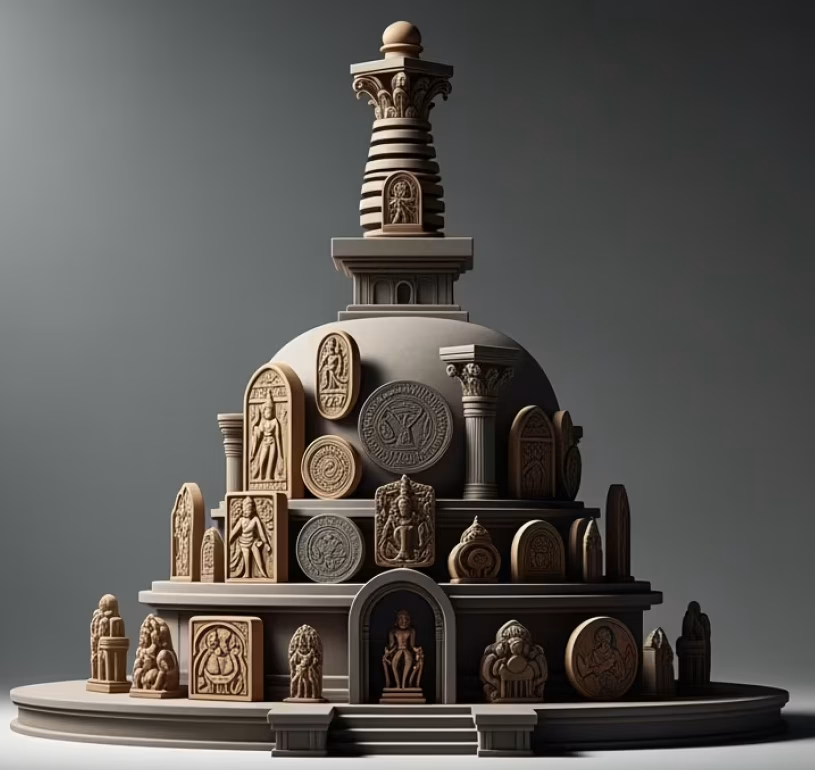
Fact 20: The components of a Stupa — Anda, Harmika, Chattra, Medhi, and Torana — are tested directly. Sanchi Stupa details appear most often.
Fact 21: Dilwara Temples of Mount Abu represent the finest Jain marble architecture. UPSC contrasts them with Buddhist and Hindu structures.
Mughal and Sultanate Art
Fact 22: Mughal miniature paintings evolved under Akbar, reached their peak under Jahangir, and declined under Aurangzeb. Jahangir’s patronage of naturalistic animal paintings is a tested fact.
Fact 23: Indo-Islamic architecture features like true arches, domes, and minarets distinguish Sultanate buildings from earlier Indian styles. The Quwwat-ul-Islam Mosque is India’s first mosque.
Bhakti and Sufi Movements
Fact 24: The pairing of Bhakti saints with their regions and philosophies is a recurring question. Ramanuja (Vishishtadvaita), Madhva (Dvaita), and Shankaracharya (Advaita) must be clearly distinguished.
Fact 25: Sufi silsilas — especially Chishti, Suhrawardi, Qadiri, and Naqshbandi — and their key saints appear in both Prelims and Mains. The Chishti order (Moinuddin Chishti, Nizamuddin Auliya) is tested most often.
How to Use This List for Your 2026 Preparation
Do not just memorise these 25 facts in isolation. Each fact sits at the centre of a web of related concepts. For example, when you study Chola bronzes, also read about the Chola administration and their temple grants. When you study Ajanta paintings, connect them to the trade routes that brought Buddhist monks to the Deccan.
I recommend making a one-page mind map for each of the themes above. Stick it where you study. Revise it weekly. Art and Culture rewards consistent, spaced revision more than last-minute cramming.
These 25 facts are your foundation. Build outward from each one, link them to your General Studies preparation, and you will find that Art and Culture questions in 2026 feel familiar rather than surprising. Start with the themes where you feel weakest, and work through one cluster every two days.
Get fastest alerts on Results, Admit Cards & Govt Jobs directly on your phone.