Most UPSC aspirants spend weeks on Mughal history and the Delhi Sultanate but rush through South Indian dynasties in a single evening. That is a costly mistake — one I have seen students pay for repeatedly across multiple exam cycles.
South Indian kingdoms are not just a “history chapter.” They sit at the intersection of art, architecture, maritime trade, governance models, and even India’s current foreign policy. In this piece, I will walk you through the major dynasties, their contributions, and exactly how UPSC tests this area — so you never lose easy marks again.
Where This Topic Sits in the UPSC Syllabus
South Indian kingdoms fall squarely under GS Paper I for Mains, within the segment on Indian culture, art forms, and architecture. For Prelims, questions on temples, dynasties, and their administrative systems appear almost every alternate year.
| Exam Stage | Paper | Syllabus Section |
|---|---|---|
| Prelims | General Studies | Indian History and Culture |
| Mains | GS-I | Indian Culture — Art Forms, Architecture, Literature |
| Mains | GS-I | Ancient Indian History — Significant Events, Personalities |
| Mains | GS-II | India’s Foreign Policy (maritime heritage angle) |
Related topics from the same syllabus zone include temple architecture styles, Indian Ocean trade networks, local self-governance in ancient India, and UNESCO World Heritage Sites.
The Four Pillars — Pallavas, Chalukyas, Cholas, and Pandyas
Think of South Indian history as resting on four major pillars. Each dynasty ruled different parts of the peninsula, often fought each other, and left behind distinct cultural legacies. Let me break them down one by one.
Pallavas (275 CE – 897 CE) ruled from Kanchipuram in present-day Tamil Nadu. They are best remembered for the Mahabalipuram rock-cut temples, which are now a UNESCO World Heritage Site. The Pallava king Narasimhavarman I built the famous Shore Temple. Their contribution to Dravidian architecture laid the foundation for all later South Indian temple building. They also patronised Sanskrit and Tamil literature heavily.
Chalukyas had two major branches — the Badami Chalukyas (6th–8th century) and the Western Chalukyas (10th–12th century). They controlled the Deccan Plateau. Pulakeshin II famously defeated Harsha of Kanauj, stopping North Indian expansion southward. The Aihole and Pattadakal temples in Karnataka represent the Chalukyan architectural style — a blend of Nagara (North Indian) and Dravidian (South Indian) elements. UPSC has asked about this blended style multiple times.
Cholas (9th–13th century) are arguably the most exam-relevant dynasty. Under Rajendra Chola I, their navy reached Southeast Asia. They conquered parts of Sri Lanka, the Maldives, and even launched a naval expedition against the Srivijaya kingdom in present-day Indonesia. The Brihadeeswarar Temple at Thanjavur — built by Raja Raja Chola I — is an engineering marvel and a frequent UPSC question target. Their village-level administration system, documented in the Uttaramerur inscriptions, is considered one of the earliest examples of local self-governance in world history.
Pandyas were based in Madurai and were great patrons of Tamil Sangam literature. Marco Polo visited the Pandya kingdom in the 13th century and documented their flourishing trade. Their pearl fishery coast was famous across the ancient world.
Why UPSC Loves This Chapter — The Multi-Dimensional Connections
I have analysed UPSC papers from 2010 to 2026, and South Indian kingdoms appear in at least three different ways.
First, direct factual questions in Prelims. You will be asked to match dynasties with their capitals, temples with their builders, or identify inscriptions. These are easy marks if your basics are clear.
Second, Mains analytical questions on art and architecture. A typical question might ask you to compare Nagara and Dravidian temple styles. Knowing Chalukyan temples as a “meeting point” of both styles gives you a strong answer edge.
Third — and this is what most students miss — current affairs connections. When Prime Minister Modi gifted a replica of a Chola bronze to a visiting dignitary, or when India’s “Act East Policy” was linked to ancient maritime routes, the roots trace back to the Chola naval empire. In 2026, India’s engagement with ASEAN nations frequently references this shared cultural heritage. Understanding the historical base makes your GS-II and Essay answers far richer.
The Chola Village Administration — A Standalone UPSC Favourite
The Uttaramerur inscriptions from the Chola period describe how village assemblies, called Sabha and Ur, functioned. Members were elected through a lottery system called Kudavolai. There were strict eligibility criteria — candidates needed to own property, be of a certain age, and have knowledge of Vedic texts.
This system is significant because it shows that democratic self-governance existed in India long before Western colonial influence. UPSC has used this topic to frame questions on Panchayati Raj, comparing ancient and modern local governance. If you can draw a line from Uttaramerur to the 73rd Constitutional Amendment in a Mains answer, you will stand out.
Art, Architecture, and Bronze Casting
Chola bronze sculptures — especially the Nataraja — are considered among the finest metal artworks ever produced anywhere in the world. The lost-wax technique (madhu uchchhishta vidhanam) used by Chola artisans is still studied by art historians globally. UPSC has asked about this technique in the Art and Culture section of Prelims.
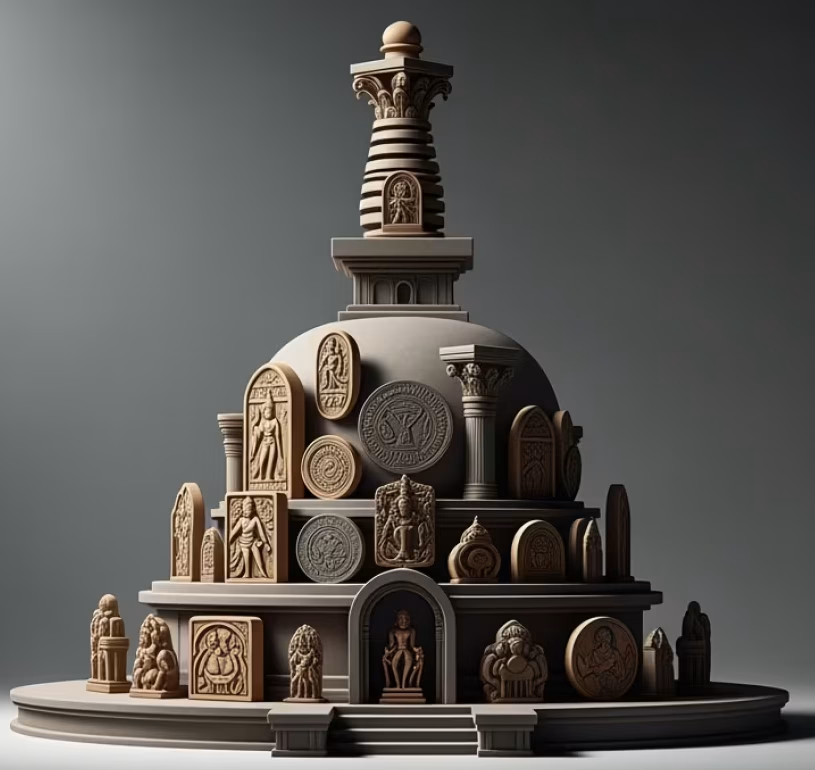
The Dravidian temple architecture style features a pyramidal tower called a Vimana over the sanctum and an elaborate gateway tower called a Gopuram. Over centuries, the Gopuram grew taller and more ornate while the Vimana remained modest — a reversal of the original Pallava proportions. This evolution is a ready-made answer point for any question on South Indian architecture.
Maritime Trade and the Indian Ocean World
South Indian kingdoms were not isolated land powers. The Cholas especially maintained a powerful navy and traded actively with China, Southeast Asia, and the Arab world. Spices, textiles, and precious stones flowed outward. Gold and horses came in.
This maritime heritage connects directly to questions on India’s Indo-Pacific strategy, SAGAR (Security and Growth for All in the Region) doctrine, and cultural diplomacy. A 2024 Mains question on India’s maritime neighbourhood could be answered more convincingly with references to Chola-era trade guilds like the Ayyavole and Manigramam.
Key Points to Remember for UPSC
- Pallavas pioneered Dravidian rock-cut architecture; Mahabalipuram is their signature site and a UNESCO heritage location.
- Chalukyan temples at Pattadakal blend Nagara and Dravidian styles — a frequent UPSC comparison point.
- Rajendra Chola I established a maritime empire reaching Southeast Asia; relevant to Act East Policy questions.
- Uttaramerur inscriptions document the Kudavolai lottery system for village governance — link this to Panchayati Raj in Mains answers.
- Chola Nataraja bronzes used the lost-wax technique; asked in Art and Culture Prelims.
- The shift from tall Vimana to tall Gopuram marks the evolution of Dravidian temple design across centuries.
- South Indian trade guilds like Ayyavole connect ancient commerce to modern Indo-Pacific strategy questions.
Mastering South Indian kingdoms gives you an edge across multiple papers — from Prelims factual questions to Mains essays on India’s cultural diplomacy. My suggestion: make a single consolidated chart of dynasties, their capitals, key rulers, temples, and unique contributions. Revise it once a week. This one chapter, studied well, can fetch you marks in GS-I, GS-II, and even the Essay paper — and that kind of return on effort is hard to find anywhere else in the syllabus.
Get fastest alerts on Results, Admit Cards & Govt Jobs directly on your phone.