
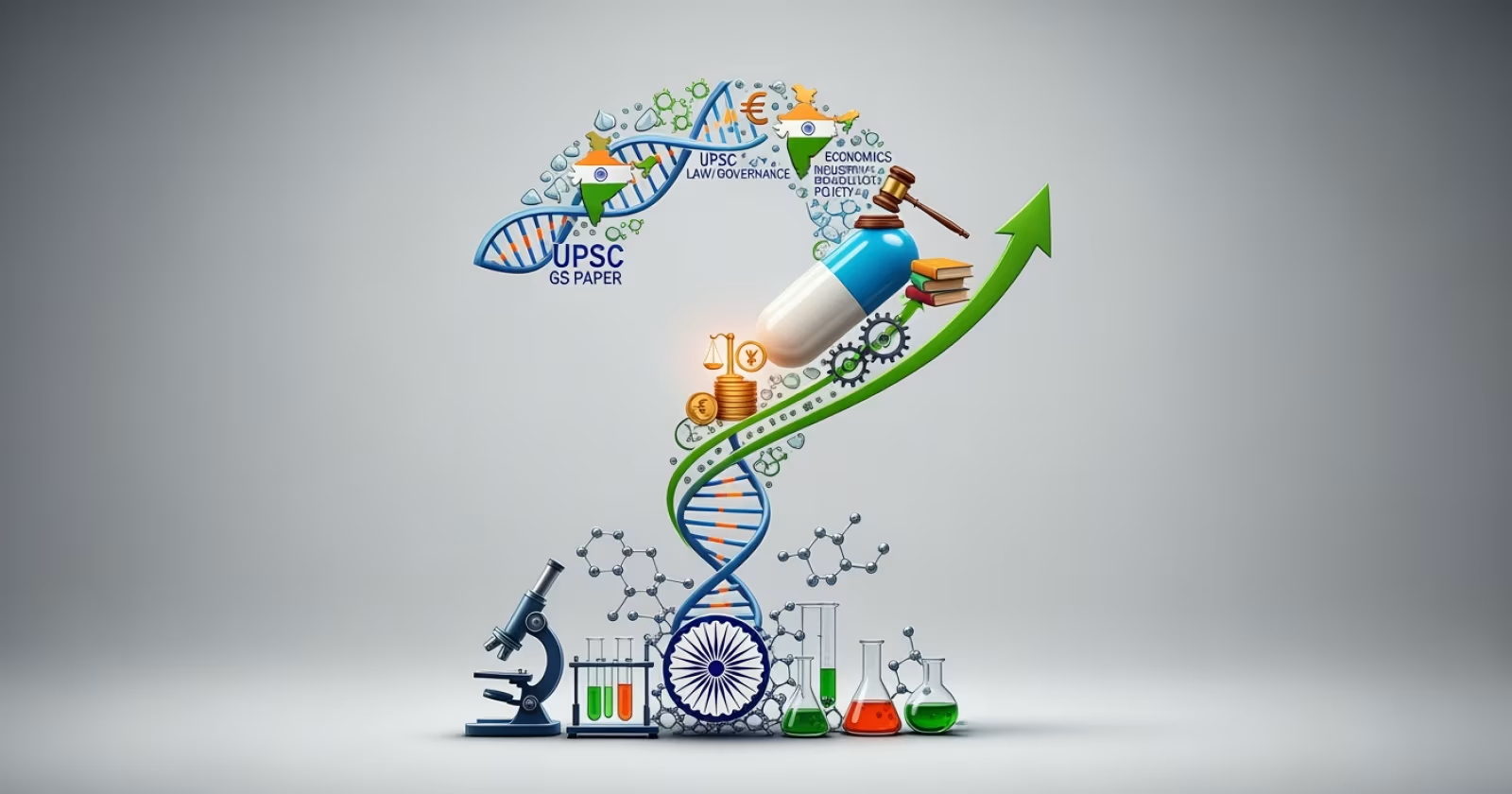
India is the pharmacy of the world — supplying over 60% of global vaccines and 20% of generic medicines. Yet most UPSC aspirants study this sector in isolation under Science and Technology, missing how it connects to Economy, Governance, Ethics, and even International Relations. I want to walk you through every angle the UPSC examiner can use to frame questions from this single sector, so you never lose marks due to a narrow understanding.
Where This Topic Sits in the UPSC Syllabus
The pharma and biotech sector is one of those rare topics that cuts across almost every General Studies paper. Let me map it clearly for you.
| Exam Stage | Paper | Syllabus Section | Angle of Questions |
|---|---|---|---|
| Prelims | General Studies | Science and Technology | Biotech terms, drug regulation, patents |
| Mains | GS-II | Government Policies and Interventions | Drug pricing policy, DPCO, health governance |
| Mains | GS-II | International Relations | TRIPS, Vaccine Maitri, WTO disputes |
| Mains | GS-III | Science and Technology Developments | Genome editing, biosimilars, mRNA technology |
| Mains | GS-III | Indian Economy — Industrial Policy | PLI scheme, API self-reliance, Make in India |
| Mains | GS-IV | Ethics in Public Life | Clinical trial ethics, access vs profit |
This topic has appeared in Prelims and Mains repeatedly since 2017, especially after the COVID-19 pandemic made pharma policy a matter of national debate. Related topics include IPR, public health infrastructure, and India’s Act East and Vaccine Diplomacy strategies.
The GS-III Dimension: Science, Technology, and Economy
This is the most obvious connection. UPSC regularly asks about developments in biotechnology — from recombinant DNA technology to CRISPR-Cas9 gene editing. You need to understand what these terms mean in simple language. Recombinant DNA technology, for instance, is the method used to combine DNA from different organisms to produce useful proteins like insulin. India’s biotech sector uses this extensively.
On the economic side, the Production Linked Incentive (PLI) Scheme for pharmaceuticals, launched to reduce India’s dependence on Chinese Active Pharmaceutical Ingredients (APIs), is a direct GS-III topic. India imports nearly 68% of its APIs from China. The PLI scheme offers financial incentives to companies that manufacture these raw materials domestically. This connects to industrial policy, self-reliance, and supply chain security — all favourite areas for Mains questions.
The Bulk Drug Parks policy and the push for biosimilars (affordable versions of complex biologic drugs) are additional areas. India approved its first biosimilar way back in 2000, long before the US or Europe created regulatory frameworks for them.
The GS-II Dimension: Governance, Policy, and International Relations
Drug pricing is a governance issue. The Drug Price Control Order (DPCO) under the National Pharmaceutical Pricing Authority (NPPA) caps the price of essential medicines. UPSC has asked about the tension between affordable healthcare and industry profitability. You should understand how the National List of Essential Medicines (NLEM) works — it is the list of drugs whose prices the government controls.
On the international front, India’s position on TRIPS (Trade-Related Aspects of Intellectual Property Rights) is a classic UPSC topic. India’s Patents Act, 1970 — amended in 2005 to comply with TRIPS — contains Section 3(d), which prevents companies from getting patents on minor modifications of existing drugs. This provision was upheld by the Supreme Court in the famous Novartis v. Union of India (2013) case. The concept of compulsory licensing, where the government allows another company to produce a patented drug without the patent holder’s consent during health emergencies, is equally important.
India’s Vaccine Maitri initiative during COVID-19 — supplying vaccines to over 90 countries — falls under India’s neighbourhood diplomacy and soft power, connecting to GS-II International Relations.
The GS-IV Dimension: Ethics of Pharma and Biotech
This is where many aspirants miss marks. The ethics paper can draw from pharma in several ways. Clinical trial ethics is a big one. India has faced criticism for conducting drug trials on vulnerable populations without proper informed consent. The New Drugs and Clinical Trials Rules, 2019 were introduced to address these concerns, mandating compensation for trial-related injuries.
The broader ethical question is about access versus profit. Should life-saving cancer drugs cost lakhs of rupees? Is it ethical for multinational companies to enforce patents that keep medicines out of reach of poor patients? These dilemmas make excellent GS-IV case study material. I advise my students to prepare at least two real-world case studies from this sector for the Ethics paper.
The GS-I Dimension: Society and Health
India’s pharma sector also connects to social issues — the urban-rural health divide, the role of generic medicines in improving public health outcomes, and the impact of government schemes like Jan Aushadhi Kendras (stores that sell affordable generic medicines). Over 12,000 Jan Aushadhi Kendras operate across India as of 2026, making essential drugs available at 50-90% lower prices.
Key Government Initiatives You Must Know
Let me list the schemes and bodies that appear most frequently in UPSC questions from this sector:
- PLI Scheme for Pharmaceuticals — incentivises domestic manufacturing of APIs and key starting materials
- National Biopharma Mission — funded by World Bank, executed by BIRAC under the Department of Biotechnology
- BIRAC (Biotechnology Industry Research Assistance Council) — supports startups and SMEs in biotech innovation
- Pharma Vision 2030 — aims to make India a global leader in end-to-end drug manufacturing
- Genome India Project — cataloguing genetic diversity of India’s population for precision medicine
- Jan Aushadhi Pariyojana — affordable generic medicine stores across India
Previous Year UPSC Questions on This Topic
Q1. What is meant by ‘
compulsory licensing’ of a patent? Under what circumstances is it granted in India?
(UPSC Mains 2013 — GS-III)
Answer: Compulsory licensing allows the government to permit a third party to produce a patented product without the patent holder’s consent. In India, under Section 84 of the Patents Act, it is granted when the patented invention is not available to the public at a reasonably affordable price, or when the patent holder has not worked the patent in Indian territory, or when public health needs are not being met. India issued its first compulsory licence in 2012 to Natco Pharma for Bayer’s kidney cancer drug Nexavar, reducing the cost from over Rs 2.8 lakh to Rs 8,800 per month.
Explanation: The examiner was testing your understanding of IPR flexibilities under Indian law and TRIPS. This question connects pharma policy with trade law and public health. When answering, always cite the specific section of the Act and the real-world example.
Q2. Which of the following is the purpose of Section 3(d) of the Indian Patents Act?
(UPSC Prelims 2019 — General Studies)
Answer: Section 3(d) prevents the grant of patents for new forms of known substances unless they show significantly enhanced therapeutic efficacy. This stops the practice of evergreening — where companies make minor changes to existing drugs just to extend patent life. The Novartis case (2013) is the landmark judgment that upheld this provision.
Explanation: UPSC tests whether you understand the difference between genuine innovation and incremental modification. This is a favourite Prelims topic because it has a clear factual answer but requires conceptual understanding.
Q3. Discuss the role of India’s pharmaceutical industry in global health equity. How does India balance its obligations under international trade agreements with domestic public health priorities?
(UPSC Mains 2022 — GS-II)
Answer: India supplies affordable generic medicines to developing nations across Africa, Asia, and Latin America. During COVID-19, India supplied over 200 million vaccine doses globally under Vaccine Maitri. However, India faces pressure from developed nations to strengthen patent protections under TRIPS-plus provisions in bilateral trade agreements. India balances this by using TRIPS flexibilities like compulsory licensing and Section 3(d), while investing in domestic R&D through BIRAC and the National Biopharma Mission to reduce long-term dependence on generics alone.
Explanation: This question tests your ability to connect trade policy, diplomacy, and health governance. The examiner wants a balanced answer — acknowledge India’s contributions but also discuss the tensions and trade-offs involved.
Key Points to Remember for UPSC
- India supplies 60% of global vaccines and 20% of world’s generic medicines — making pharma a diplomatic and economic asset
- Section 3(d) of the Patents Act prevents evergreening and was upheld in the Novartis judgment of 2013
- The PLI Scheme for pharma targets reduction of API imports from China, which currently stand at about 68%
- Compulsory licensing under Section 84 was first used in 2012 for Natco Pharma’s generic version of Nexavar
- Clinical trial ethics, informed consent, and the 2019 Rules are relevant for GS-IV case studies
- BIRAC under the Department of Biotechnology is the nodal agency for biotech startup support
- Jan Aushadhi Kendras number over 12,000 in 2026 and sell generics at 50-90% lower prices
Understanding this sector as a cross-cutting theme rather than a single-paper topic will give you a significant edge. I suggest you make a one-page mind map connecting pharma and biotech to each GS paper, and revise it once a month. The examiner rewards aspirants who can draw connections — and this sector offers more connections than almost any other.
Get fastest alerts on Results, Admit Cards & Govt Jobs directly on your phone.