
How Land Reform History Connects Ancient Agrarian Economy to UPSC GS-III Policy Today

How Land Reform History Connects Ancient Agrarian Economy to UPSC GS-III Policy Today
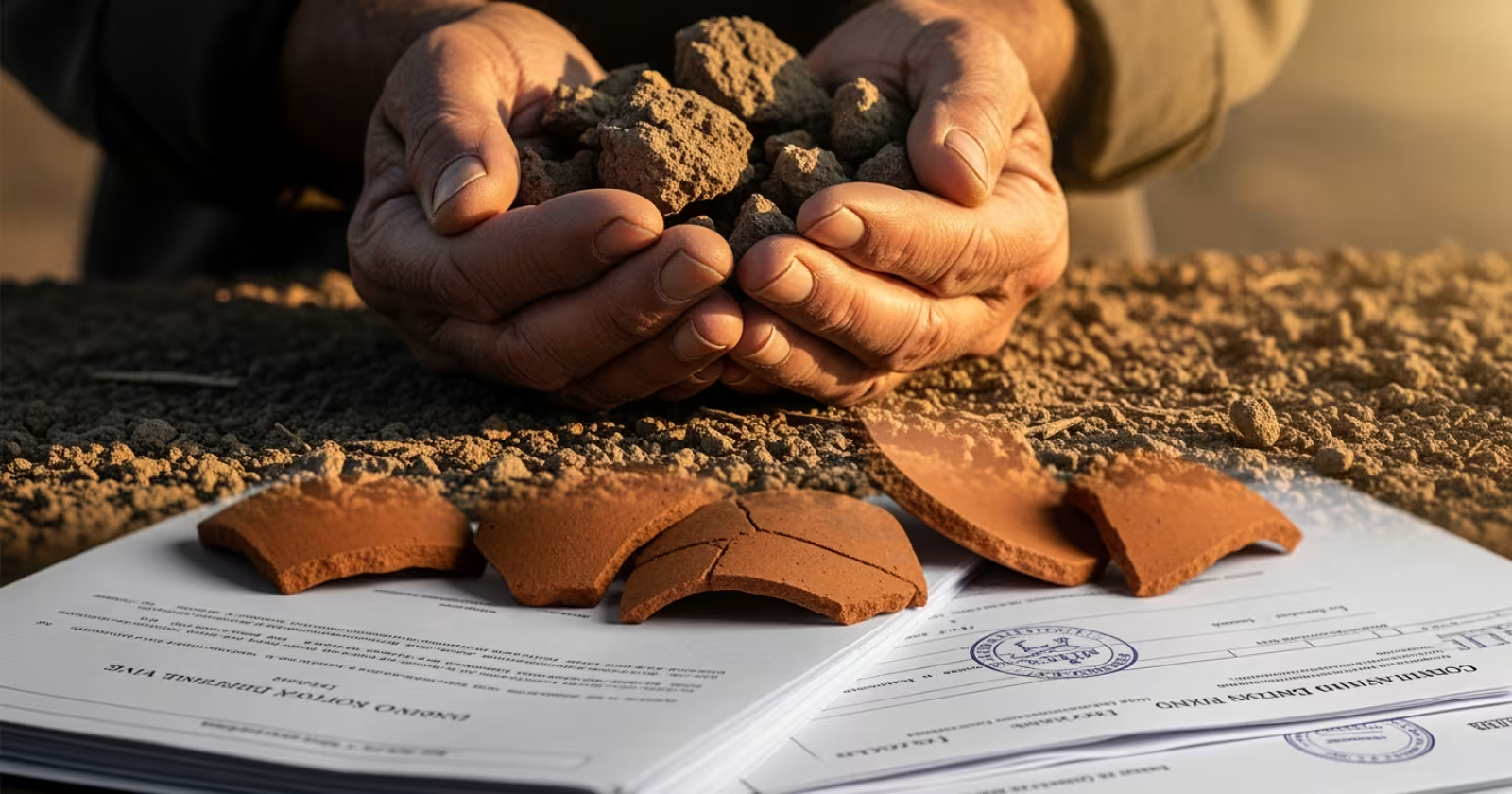
From the Mauryan Empire’s careful revenue collection to the heated debates in India’s first Parliament about abolishing zamindari, land has always been at the heart of Indian governance. If you are preparing for UPSC, understanding this long arc of land policy is not optional — it is the backbone of several GS-III questions on agriculture, … Read more


Why Preparing Ancient History Without Maps Is a Major UPSC Strategy Mistake

Why Preparing Ancient History Without Maps Is a Major UPSC Strategy Mistake

I have seen hundreds of aspirants memorise entire chapters of ancient history — dates, dynasties, cultural achievements — and still lose easy marks in Prelims. The missing piece, almost every single time, is a map. If you are reading ancient history like a novel instead of placing every event on the map of the Indian … Read more

How the Nalanda and Takshashila Questions Connect Ancient History to Education Policy in UPSC

How the Nalanda and Takshashila Questions Connect Ancient History to Education Policy in UPSC

Two ancient centres of learning, separated by centuries and thousands of kilometres, keep appearing in UPSC papers in ways most aspirants do not expect. The examiner does not just ask you to recall dates about these universities. Instead, the questions bridge ancient Indian intellectual traditions with modern debates on education reform, and that pattern is … Read more

Why Sanskrit Literature and Ancient Indian Knowledge Systems Are Growing UPSC Topics

Why Sanskrit Literature and Ancient Indian Knowledge Systems Are Growing UPSC Topics

Over the last four UPSC cycles, questions on ancient Indian texts, scientific contributions, and classical knowledge traditions have quietly doubled. If you have been ignoring Sanskrit literature and India’s pre-modern intellectual heritage, your preparation has a growing blind spot. I have tracked this shift closely since 2022. After teaching thousands of aspirants, I can tell … Read more

How the Mauryan Empire Chapter Bridges Ancient History and UPSC GS-II Governance

How the Mauryan Empire Chapter Bridges Ancient History and UPSC GS-II Governance

Most aspirants study the Mauryan Empire only for GS-I Ancient History and forget about it when they open their GS-II notes. That is a costly mistake. The administrative genius of Chandragupta, Kautilya, and Ashoka laid down principles that still echo in how modern India governs itself — from centralised bureaucracy to the welfare state idea … Read more